
Custom AI for transport: automate without replacing your ERP
Platform, custom module, IT responsibilities and pilot validation: scope an AI solution for your transport processes and existing ERP.
Your ERP works. But between exports, freight invoices and manual checks, some of the work remains unfinished. Custom AI can complement that workflow: an existing platform, a module adapted to your rules and a clearly defined scope to validate.
 Open full-size screenshot
A shared foundation and a dedicated module
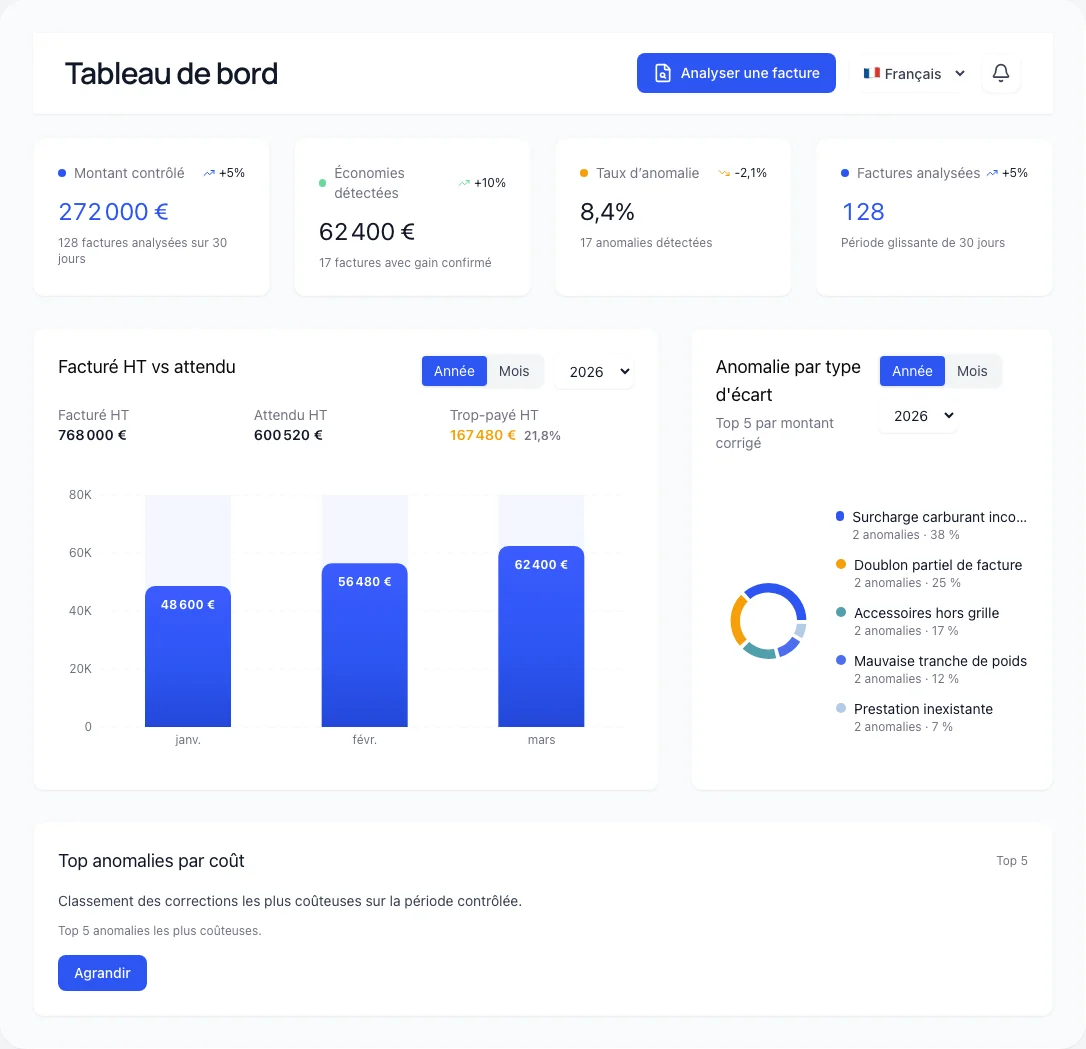
At FretGuard, the starting point is our transport invoice analysis platform. Custom development addresses what your organisation does differently. For example:
- Trace a cost back to an order, even when it covers several shipments.
- Present discrepancies in the format your finance team needs.
- Adapt the approval workflow to your internal rules.
These are needs to assess, not connectors already available. The proposal should distinguish existing features, configuration and new development.
Where AI helps and where explicit rules belong
- Explicit rules: recalculate a price, apply a rate card, check a reference.
- AI to evaluate: extract information or suggest a match between descriptions.
- Human review: resolve an uncertain match and retrieve its source document.
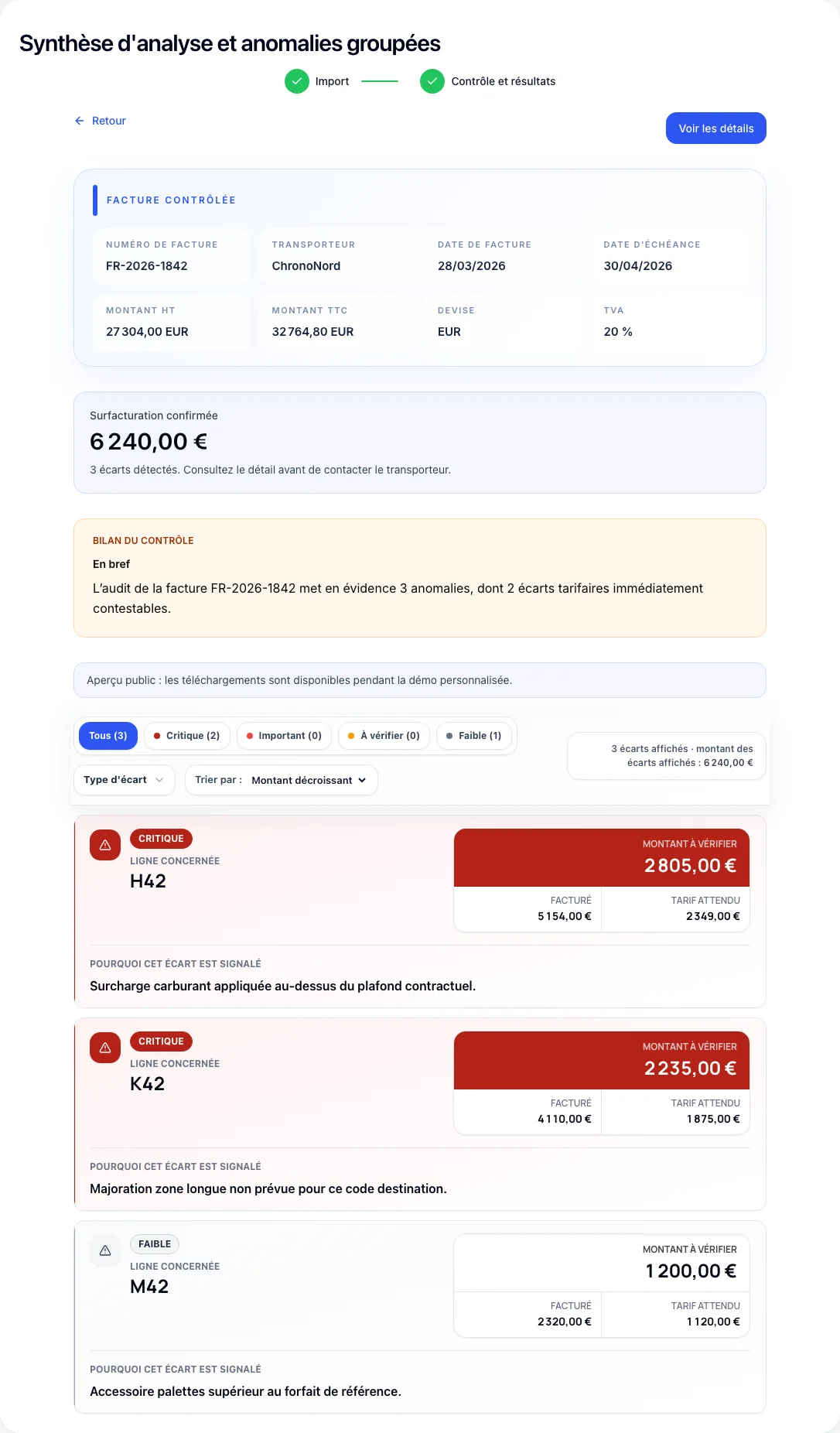
A plausible answer is not evidence. Anyone reviewing a discrepancy must be able to understand the rule applied and check the data used.
 Open full-size screenshot
Build with your IT team
Your IT team retains control of access and ERP data exchanges. Transport and finance teams define the business rules. FretGuard brings its platform and develops the agreed module. The aim is to reuse what exists and focus development on your specific need.
If configuring your current software solves the problem, start there. Custom development makes sense when a real business gap remains. An export may be enough for a pilot; any ERP write-back needs a separate assessment.
Read the ERP integration and invoice reconciliation guide
Three decisions for a pilot
- Scope: one data flow, a defined period and a manually verified expected result.
- Acceptance: test normal cases, missing data and false alerts.
- Follow-through: assign an owner for exceptions and measure review time.
Before sharing files, minimise the data and agree on access, retention and incident recovery. A pilot must be allowed to conclude that results are insufficient: it is not a commitment to proceed.
Compare initial and recurring costs
Separate the initial project cost — scoping, adaptation and integration — from operating costs: hosting, AI usage, monitoring and support. Also agree who maintains the module when the ERP changes and how to retrieve your data. The right model depends on the ongoing service actually provided.
Prepare a useful first discussion
Bring an example task, an anonymised export, the desired result and your main exceptions. These make it possible to discuss a concrete module rather than an overly broad “AI” project.
Sources and references
A transport workflow to adapt?
Describe your needs and tools. We will distinguish the existing platform, the adaptations to plan and the questions to investigate with your IT team.
Discuss your project